
HealthyPa · Lung Health Ingredient Guide
Two popular ingredients, two different evidence stories. Understand what NAC and mullein may offer, where the research is limited, and what to check before choosing a supplement.
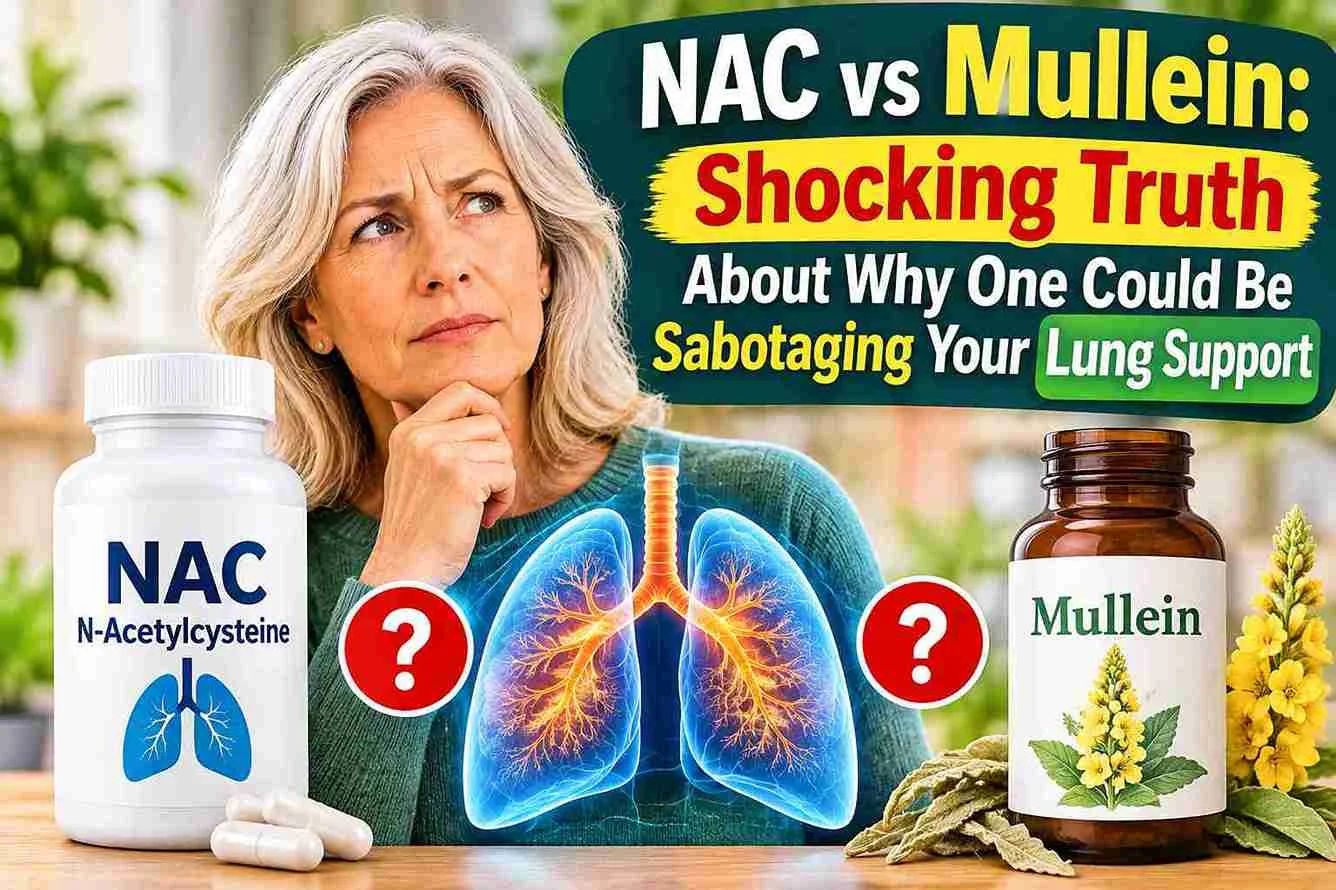
NAC and mullein are often mentioned in conversations about mucus, coughing and respiratory wellness. They are not the same type of ingredient, however, and the research behind them is quite different. NAC has been studied in people with certain chronic respiratory conditions, while mullein is better known as a traditional herbal remedy.
So, when comparing NAC vs mullein, the most useful question is not which one is the stronger lung cleanser. Neither ingredient has been proven to detoxify the lungs. A better comparison looks at how each is used, what human studies actually show, and whether the available evidence applies to the supplement sitting on a store shelf.
Quick answer: NAC vs mullein
NAC has the stronger clinical research background, particularly as a mucus-thinning medicine and in studies involving chronic bronchitis or COPD. However, results vary, and evidence from medical preparations or specific clinical doses does not automatically prove that every retail NAC supplement will help.
Mullein has a history of traditional use, including preparations made from its flowers and leaves. The European Medicines Agency says clinical studies of mullein flower medicines are lacking. That means its traditional use should not be confused with proven treatment for lung disease.
Neither should replace an inhaler, prescribed medicine, medical assessment or a smoking-cessation plan.
On this page
1. What is NAC?
N-acetylcysteine, usually shortened to NAC, is a form of the amino acid cysteine. It is used in medicine for specific purposes and is also sold in some markets as a dietary supplement. One reason it attracts interest in respiratory health is its ability to act as a mucolytic, meaning it can help make mucus less thick and sticky.
NAC also helps the body produce glutathione, an antioxidant involved in protecting cells from oxidative stress. These properties have made it a subject of research in conditions where mucus production, inflammation and oxidative stress may be relevant.
How NAC is used in respiratory medicine
Medical NAC is available in different forms, including inhaled preparations used under medical supervision. The US National Institutes of Health Office of Dietary Supplements explains that much of the respiratory research has involved inhaled liquid NAC, which is classified as a drug in the United States rather than a dietary supplement.
This distinction matters. A medicine used for a defined purpose, with a known formulation and dose, is not interchangeable with a capsule purchased online. A supplement label may list NAC, but that alone does not establish that the product has the same clinical effect as a studied medical preparation.
What NAC research may tell us
Researchers have examined NAC in people with chronic obstructive pulmonary disease (COPD) and chronic bronchitis. Some studies and reviews have reported fewer exacerbations in certain groups, although the size and consistency of the benefit depend on the study population, dose and duration.
For example, a 2024 meta-analysis of studies involving COPD and chronic bronchitis reported a reduction in exacerbation rates in the groups receiving NAC. That finding is relevant to people with diagnosed respiratory conditions, but it is not evidence that NAC prevents lung disease in healthy adults or reverses damage from smoking.
A separate large randomized trial involving 968 people with mild-to-moderate COPD examined high-dose NAC over two years. Its results add useful context, but they do not justify assuming that a lower-dose retail supplement will produce the same outcome.
The practical takeaway is that NAC has a more developed clinical research history than many herbal lung-support ingredients. It is still important to match the evidence to the exact condition and formulation being discussed.
2. What is mullein?
Mullein is the common name for plants in the Verbascum genus. Different preparations may use the flowers, leaves or extracts. Mullein has a long history in traditional herbal practice, where it has been used in teas and other preparations associated with throat and respiratory comfort.
Modern products may contain mullein as a dried herb, tea, capsule, tincture, liquid extract or part of a multi-ingredient formula. These forms are not necessarily equivalent. The plant part, extraction method, concentration and amount per serving can all affect what a product contains.
Why people use mullein
Mullein is commonly marketed for respiratory wellness, mucus support and soothing an irritated throat. These uses are often described using terms such as expectorant or soothing herb. Those descriptions reflect traditional use and proposed effects; they should not be read as proof that mullein clears mucus from the lungs or improves lung function in clinical practice.
The European Medicines Agency has assessed mullein flower medicines. Its public summary says that the traditional use for relief of sore throat is based on long-standing use, not sufficient clinical trial evidence. The agency specifically notes the lack of clinical studies.
That is an important limitation for anyone comparing mullein with NAC. A history of use can help explain why an herb is popular, but it does not establish how well it works, what dose is effective or whether it treats a respiratory condition.
Mullein leaf, flower and extract are not identical
When reading a mullein label, check which plant part is used. A product containing mullein leaf extract is not automatically the same as a traditional mullein flower preparation. Extract strength and serving size also matter.
It is also worth checking whether the product is a single-herb preparation or a blend. If a liquid contains mullein alongside ginger, bromelain, lemon peel or other ingredients, any claimed effect cannot automatically be attributed to mullein alone.
3. NAC vs mullein: key differences
The table below summarizes the practical differences. It is an evidence comparison, not a claim that either ingredient is a proven treatment for breathing problems.
| Comparison point | NAC | Mullein |
|---|---|---|
| Ingredient type | A modified form of the amino acid cysteine | A botanical herb from the Verbascum genus |
| Main respiratory interest | Mucus-thinning activity and research into antioxidant effects | Traditional use for throat and respiratory comfort |
| Human respiratory research | Clinical trials and reviews exist, including studies in COPD and chronic bronchitis | Limited clinical evidence; EMA notes a lack of clinical studies for mullein flower medicines |
| Evidence strength | More developed, but condition- and formulation-specific | Primarily traditional-use evidence for the assessed preparations |
| Product formats | Capsules, tablets, powders and medical inhaled preparations | Teas, capsules, tinctures, liquid extracts and blends |
| Key label detail | Amount of NAC per serving and formulation | Plant part, extract details and amount per serving |
| Important limitation | Supplement evidence is not the same as evidence for prescribed or inhaled NAC | Traditional use does not establish clinical effectiveness for lung disease |
Which has more research behind it?
NAC clearly has the larger body of respiratory research. It has been investigated in clinical settings, especially in people with chronic mucus-related conditions. Mullein has a longer traditional history, but its clinical evidence is much less developed.
That does not mean NAC is automatically the right choice for everyone. A person with a diagnosed condition needs advice based on their health history and current treatment. Someone without a diagnosed respiratory condition should be cautious about buying either ingredient simply because an advertisement promises cleaner lungs or easier breathing.
4. What does the research actually support?
NAC: promising evidence in specific respiratory conditions
The NIH Office of Dietary Supplements describes NAC as an antioxidant with mucolytic activity. It also explains that NAC can raise levels of glutathione inside cells. These biological properties help explain why researchers have studied it, but a plausible mechanism is not the same as a proven health outcome.
A 2024 review and meta-analysis by Papi and colleagues examined NAC in COPD and chronic bronchitis or pre-COPD populations. The authors reported lower exacerbation rates in the NAC groups in the included studies. This is useful evidence for a specific clinical question, not a blanket recommendation for healthy adults to take NAC.
Another 2024 randomized clinical trial studied 600 mg of NAC twice daily in people with mild-to-moderate COPD over two years. The trial is important because it involved a substantial number of participants and a defined dose. Its findings should still be interpreted in the context of the people enrolled and the treatment conditions used.
For an everyday reader, the central point is simple: NAC has been studied more extensively than mullein, but the evidence does not mean that it can detoxify lungs, undo smoking-related damage or replace standard COPD treatment.
Mullein: traditional use is not the same as clinical proof
The European Medicines Agency’s assessment of mullein flower medicines is especially useful because it separates traditional use from clinical evidence. The agency’s conclusion for the assessed preparations relates to traditional use for relief of sore throat. It also says that sufficient clinical trial evidence is lacking.
This is narrower than many online product descriptions. A seller may describe mullein as an expectorant, lung cleanser or airway-soothing ingredient. Those are marketing descriptions unless supported by suitable human studies of the actual preparation and outcome being claimed.
There is also a difference between a traditional herbal tea and a concentrated extract in a commercial formula. The EMA assessment should not be treated as proof that every mullein product is effective or that all preparations have identical safety characteristics.
What neither ingredient has proven
Neither NAC nor mullein should be described as a lung detox. The lungs have natural mechanisms for clearing inhaled particles and mucus. A supplement cannot be assumed to remove accumulated toxins, reverse emphysema or repair damaged air sacs because a seller uses words such as cleanse, restore or rejuvenate.
Likewise, ingredient research does not prove that a finished blend works. A formula may combine several ingredients with interesting laboratory or early-stage research, but the amounts, preparation and combination may differ from the studies. Without a clinical trial of the actual finished product, its overall effectiveness remains uncertain.
5. What about Lungora and RespiClear?
Some readers comparing NAC and mullein are also considering branded lung-support supplements. It is important to check the actual label rather than assuming a product contains the ingredient being researched.
RespiClear: a mullein-based liquid formula
The current RespiClear website describes a liquid product containing mullein leaf extract alongside ginger root, bromelain, lemon peel extract and cordyceps militaris extract. Its product page presents the formula as a respiratory-support product. Those statements are seller claims, not proof that the finished liquid improves lung function or treats a respiratory condition.
The product page text I could access did not provide a clearly verifiable amount for each active ingredient. That makes it difficult to compare its mullein content with a specific research preparation. Before buying, check the physical label or full Supplement Facts information, including the serving size and the amount of each ingredient.
The current seller page also displays package offers and a money-back guarantee. Offers and return wording can change, and the checkout may present optional automatic-refill selections. Review the final order total, delivery details and any recurring-payment setting before completing a purchase.
HealthyPa has a separate review that examines the RespiClear product claims and buying information. It is useful as a product-specific follow-up, but it should not be treated as independent clinical evidence for mullein.
Check RespiClear prices and packages
HealthyPa may earn a commission if you purchase through links on this page, at no extra cost to you.
Read the HealthyPa RespiClear review for a closer look at the formula and the product-specific claims.
Lungora: a different multi-ingredient formula
Lungora is not a NAC supplement or a mullein supplement according to the product information reviewed by HealthyPa. Its listed formula includes magnesium glycinate, alpha-lipoic acid, butcher’s broom, L-carnitine, turmeric extract and CoQ10.
The HealthyPa review found that the product uses a 575 mg proprietary blend for five of its listed ingredients, with individual amounts not disclosed in the reviewed information. It also found no published clinical trial showing that the finished Lungora formula improves breathing or cleanses the lungs.
That means Lungora should not be compared as though it were a direct alternative to a single-ingredient NAC or mullein product. It is a separate multi-ingredient wellness formula, with its own label-transparency and evidence questions.
Check Lungora prices and packages
For the full ingredient breakdown, price information and limitations, see the HealthyPa Lungora review.
Important product distinction
RespiClear’s current product page lists mullein as one ingredient in a multi-ingredient liquid. Lungora’s reviewed formula does not list NAC or mullein. Neither product should be presented as a clinically proven substitute for a medical NAC preparation.
6. NAC and mullein safety: what should you check?
Natural does not automatically mean risk-free. Safety depends on the ingredient, amount, preparation, medical history and medicines a person already takes. This is particularly important for adults over 40 who may be managing more than one health condition.
Possible NAC side effects and interactions
Oral NAC can cause digestive side effects, including nausea, vomiting, abdominal discomfort, diarrhea, indigestion and heartburn. The NIH Office of Dietary Supplements also notes possible interactions involving blood thinners and blood-pressure medicines. Combining NAC with nitroglycerin may cause low blood pressure and severe headaches.
These considerations do not mean that every person taking one of these medicines will experience a problem. They do mean that it is sensible to ask a doctor or pharmacist to check the exact product and dose before starting NAC, especially if you take several medicines.
Mullein safety and product quality
The safety information for mullein depends on the plant part and preparation. The EMA’s assessment of mullein flower medicines reported no side effects at the time of its assessment, but it also noted that clinical and safety data were limited. That should not be interpreted as proof that every concentrated extract or multi-herb product is safe for every person.
Be particularly careful if you are pregnant, breastfeeding, have a long-term medical condition or take prescription medicines. The evidence base for interactions may be incomplete. Ask a healthcare professional before using a concentrated herbal product in these circumstances.
Check the label before buying
- Confirm the exact ingredient name and plant part.
- Look for the amount per serving rather than relying on a large front-label number.
- Check whether the product is a single ingredient or a proprietary blend.
- Read the full list of additional ingredients, sweeteners, preservatives and allergens.
- Look for a clear manufacturer or distributor contact route.
- Read the refund policy and check whether return shipping is your responsibility.
- Check whether the checkout has selected an automatic refill or subscription.
HealthyPa’s Supplement Safety Guide explains how to assess labels, possible interactions and other common supplement risks.
7. How to choose between NAC and mullein
The right decision depends on why you are considering a supplement in the first place. It is not sensible to choose an ingredient based only on a broad promise to support lung health.
If your main concern is thick or persistent mucus
NAC has a more established mucolytic role and a larger clinical research history. However, persistent mucus can have several causes, including infection, asthma, COPD, bronchiectasis, smoking and environmental irritation. A supplement should not be used to guess at the cause or delay an assessment.
If you are interested in traditional herbal products
Mullein may appeal to someone who prefers a traditional herbal preparation. Be realistic about the evidence, though. The EMA’s assessment does not establish that mullein treats chronic cough, COPD, asthma or reduced lung function.
If you are comparing branded products
Do not assume a branded blend delivers the same ingredient dose used in a clinical study. Look for a complete label and transparent quantities. If the product hides individual amounts inside a proprietary blend, you cannot easily compare its ingredients with research doses.
It is also useful to separate the cost of a product from the strength of its evidence. A multi-bottle discount may reduce the price per bottle while increasing the amount you spend upfront. A long guarantee does not demonstrate that a supplement works.
If you smoke or used to smoke
Do not rely on NAC, mullein or a lung-support blend to reverse the effects of smoking. Quitting smoking is one of the most important steps a person can take to protect respiratory health. If you have ongoing cough, wheezing or breathlessness, ask a healthcare professional whether a lung-function assessment is appropriate.
HealthyPa’s guide to lung health for smokers covers broader lifestyle and health considerations. Supplements should remain secondary to proven prevention and medical care.
A sensible pre-purchase checklist
- Have I identified the reason I want to use this ingredient?
- Have I checked whether the evidence relates to my health situation?
- Can I see the exact amount of the active ingredient per serving?
- Have I checked the product’s other ingredients and warnings?
- Have I asked a pharmacist about possible medicine interactions?
- Do I understand the full price, shipping cost and refund conditions?
- Am I avoiding claims that promise a lung cleanse or a cure?
8. When to seek medical advice
A persistent cough, ongoing mucus production, wheezing or breathlessness deserves attention, especially if it is new, worsening or affecting everyday activities. These symptoms can have many causes, and a healthcare professional can decide whether an examination or tests are needed.
Seek urgent medical help for severe or sudden breathing difficulty, chest pain or pressure, coughing up significant blood, fainting, or blue or grey lips. Do not wait to see whether a supplement helps.
If you already use an inhaler or other prescribed respiratory treatment, do not stop or change it because you are considering NAC or mullein. Ask your prescriber or pharmacist before adding a supplement.
9. Frequently asked questions
Is NAC better than mullein for lung support?
NAC has a stronger clinical research background, particularly in certain chronic respiratory conditions. Mullein has a history of traditional use, but clinical evidence is limited. Whether either is appropriate depends on the person’s health situation, the exact product and professional advice.
Does mullein help clear mucus from the lungs?
Mullein is traditionally used in herbal preparations associated with respiratory comfort. However, the European Medicines Agency reports a lack of clinical studies for mullein flower medicines. It is not established as a treatment that clears mucus from the lungs.
Does NAC remove toxins from the lungs?
No. NAC has mucolytic and antioxidant properties, but that does not mean it detoxifies the lungs or removes accumulated toxins. Claims that a supplement cleanses or repairs the lungs should be treated cautiously.
Can I take NAC and mullein together?
There is not enough product-specific evidence to recommend a combination for everyone. Using more than one supplement can make it harder to identify side effects and may increase the chance of interactions. Ask a pharmacist or doctor to review the exact products and your medicines before combining them.
Is mullein tea the same as mullein extract?
No. Tea, dried herb, tinctures and concentrated extracts can differ in plant part, preparation and strength. A finding about one preparation should not automatically be applied to another. Read the label carefully and avoid assuming that all mullein products provide the same amount.
Can NAC or mullein replace an inhaler?
No. Neither should replace a prescribed inhaler or other treatment for asthma, COPD or another respiratory condition. Do not stop prescribed treatment without speaking to the clinician who manages your care.
Related HealthyPa reading
- Lungora review: ingredients, safety and buying considerations
- RespiClear review: formula claims and product information
- Supplement Safety Guide: labels, risks and interactions
- Lung Health for Smokers: practical ways to protect respiratory health
10. Final thoughts: NAC vs mullein
When comparing NAC vs mullein, NAC has the stronger respiratory research base, particularly in certain diagnosed chronic conditions where mucus and exacerbations are relevant. Mullein is a traditional herbal ingredient with much less clinical evidence behind its respiratory claims.
That difference is useful, but it is not a reason to self-treat persistent breathing symptoms. Check the exact preparation, ingredient amount, safety information and relevance of the research before spending money. A product’s marketing language or refund promise cannot replace evidence from studies of the finished formula.
For anyone with ongoing cough, mucus or breathlessness, the most useful next step may be a medical assessment rather than another supplement. If you are considering a product, take its full label to a pharmacist or healthcare professional and ask whether it is suitable alongside your existing treatment.
Sources and editorial note
The following sources were used to explain the difference between NAC and mullein and to check the evidence and safety context:
- US National Institutes of Health, Office of Dietary Supplements: Dietary Supplements for Immune Function and Infectious Diseases. Includes information on NAC, mucolytic activity, glutathione and safety considerations.
- European Medicines Agency: Mullein flower herbal medicinal product. Explains the traditional-use basis and the lack of clinical studies for the assessed mullein flower medicines.
- Papi A. et al. (2024): N-acetylcysteine treatment in COPD and chronic bronchitis/pre-COPD. A review and meta-analysis of NAC research in defined respiratory populations.
- Zhou Y. et al. (2024): High-dose NAC in mild-to-moderate COPD. A randomized clinical trial involving 968 participants.
- NICE: Cough (acute) antimicrobial prescribing. Provides guidance on acute cough and the use of mucolytic medicines.
- US Food and Drug Administration: Questions and Answers on Dietary Supplements. Explains the regulatory distinction between dietary supplements and medicines.
Editorial note: This article is for general educational purposes and is not medical advice, diagnosis or treatment. Research on an individual ingredient does not prove that a finished supplement formula is effective. Product descriptions, prices, package offers and return terms can change; check the current label and checkout information before ordering. HealthyPa may earn a commission from qualifying purchases made through affiliate links. Affiliate relationships do not establish product effectiveness.
The information provided on HealthyPa.com is for educational and informational purposes only and is not intended as medical advice. The content on this website, including articles, reviews, and product recommendations, should not be used as a substitute for professional medical advice, diagnosis, or treatment.
Always seek the advice of your physician or other qualified health provider with any questions you may have regarding a medical condition or before starting any new supplement, diet, or exercise program. Never disregard professional medical advice or delay in seeking it because of something you have read on this website.
The statements regarding dietary supplements have not been evaluated by the Food and Drug Administration (FDA). These products are not intended to diagnose, treat, cure, or prevent any disease.
Individual results may vary. The testimonials and experiences shared on this website are individual cases and do not guarantee that you will achieve the same results.
If you are pregnant, nursing, taking medication, or have a medical condition, consult your healthcare provider before using any products reviewed or recommended on this site.
HealthyPa.com and its authors, contributors, and affiliated parties assume no responsibility for any consequences relating directly or indirectly to any action or inaction you take based on the information found on this website.
By using this website, you acknowledge and agree to this disclaimer.
HealthyPa.com is reader-supported. When you buy through links on our site, we may earn an affiliate commission at no additional cost to you. This helps us keep our content free and continue providing valuable health information. We only recommend products we genuinely believe in. Learn more in our full Affiliate Disclosure Policy.