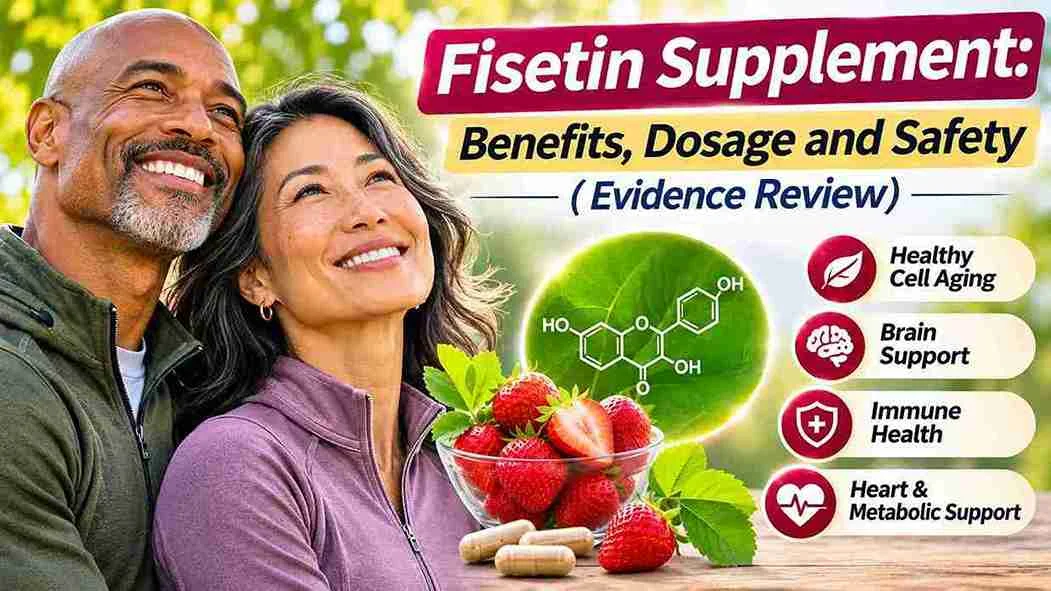
Short answer: Fisetin is a plant flavonoid found in strawberries and apples. It clears senescent (“zombie”) cells in mice, which is why it’s sold as an anti-ageing supplement. In humans, the evidence is still early: small studies show changes in blood senescence markers, but no trial has shown that fisetin improves health or slows ageing. Its main safety issue is a possible interaction with blood thinners.
Affiliate disclosure: HealthyPa may earn a commission if you buy through our links, at no extra cost to you. Our score follows our published review method and the evidence described on this page.
| Quick facts |
|
| What it is |
A flavonoid in strawberries, apples, persimmons and onions |
| Main claim |
Senolytic: helps clear senescent cells |
| Human evidence |
Small, early studies; several trials ongoing |
| Typical supplement dose |
100–500mg daily, or high-dose ‘pulse’ protocols in trials |
| Key safety issue |
May affect how warfarin and some other drugs are broken down |
What Is Fisetin?
Fisetin is a natural flavonoid, a type of plant pigment. Strawberries are the richest food source, but you’d need to eat a huge amount to match supplement doses. It became popular after mouse studies found it was among the most potent natural compounds at clearing senescent cells, the damaged cells that stop dividing and release inflammatory signals as we age.
Does Fisetin Work in Humans?
Not yet proven. Most of the excitement comes from cell and animal studies. In people, the published data is limited to small studies measuring blood markers. A 2026 preprint compared a short high-dose ‘bolus’ regimen with daily dosing in adults over 55 and reported that bolus dosing reduced senescence-related gene activity in blood cells more than daily dosing. It hasn’t been peer reviewed yet, and it measured gene activity, not health outcomes.
Larger trials, including studies of frailty, joint health and bone health, are under way. Until they report, any claim that fisetin reverses ageing, sharpens memory or extends life goes beyond the evidence.
Daily vs ‘Pulse’ Dosing
Supplements usually offer 100–500mg a day. Research protocols often use a different approach: a high dose (around 20mg per kg of body weight) for two days, repeated monthly. The idea is to hit senescent cells hard and then stop. Early data hints that pulse dosing may matter, but no protocol is proven. If you’re considering high-dose pulses, do it with a doctor.
Fisetin Side Effects and Interactions
In the limited human studies, fisetin has been well tolerated. The most common complaint is mild stomach upset. The bigger concern is interactions. A clinical trial protocol notes that fisetin, like other flavonoids, can inhibit the liver enzyme CYP2C9, and researchers take precautions to avoid interactions with drugs such as warfarin.
Don’t take fisetin without medical advice if you:
- take warfarin or other blood thinners
- take medicines processed by liver CYP enzymes (ask your pharmacist)
- are pregnant or breastfeeding
- have cancer or are having cancer treatment
- are having surgery soon
Where to Buy Fisetin
Aeternum sells fisetin as 500mg capsules, 60 per bottle (£35, or about £0.58 a day at one capsule). That’s a UK display price on 14 November 2026. Aeternum’s own product page is careful: it says human evidence is preliminary and doesn’t claim proven results.
Fisetin in Food: How Much Can You Get?
Fisetin is found in many fruits and vegetables, but in small amounts. Strawberries are the richest everyday source, at around 160 micrograms per gram, followed by apples at about 27 and persimmons at about 10.5. The table below shows roughly what a normal portion provides.
| Food |
Fisetin (µg per g) |
Approx. per portion (upper estimate) |
Portions to reach 100mg |
| Strawberries |
160 |
Up to ~16mg per 100g |
6+ portions (600g+) |
| Apple |
26.9 |
Up to ~4mg per apple (150g) |
25+ apples |
| Persimmon |
10.5 |
Up to ~1.6mg per fruit (150g) |
60+ fruits |
| Onion |
4.8 |
Up to ~0.5mg per onion |
190+ onions |
| Grapes |
3.9 |
Under 1mg per bunch |
Not practical |
These figures were measured in freeze-dried samples, so fresh fruit contains less, and levels also vary with variety and ripeness. Treat the portion figures as best-case estimates. The point stands: a normal diet gives you a few milligrams at most, while a supplement gives 100–500mg. That gap is why supplement research and food research aren’t interchangeable.
Absorption: Take It With Fat
Fisetin doesn’t dissolve well in water and is poorly absorbed on its own. That’s why some brands add oils or use ‘enhanced’ forms, and why it’s usually taken with a meal containing some fat. The improved forms haven’t been compared head-to-head in outcome trials. In practice, take plain fisetin with breakfast or lunch rather than on an empty stomach.
Fisetin vs Quercetin
Quercetin is fisetin’s better-known cousin. It’s another flavonoid, and it’s usually combined with the cancer drug dasatinib in senolytic research. Quercetin is far easier to get from food (capers, onions, kale) and has more human data overall. In lab studies, fisetin looked like the more potent senolytic on its own. Neither has proven anti-ageing benefits in people.
|
Fisetin |
Quercetin |
| Food availability |
Low (mainly strawberries) |
Higher (capers, onions, kale, apples) |
| Senolytic potency in lab studies |
Higher on its own |
Mainly studied with dasatinib |
| Human trial data |
Early |
More, but mostly not for ageing |
| Absorption |
Poor; take with fat |
Poor; take with fat |
What Trials Are Under Way?
Several clinical trials are testing fisetin in specific groups, including frailty, joint pain, bone health and recovery after chemotherapy. Most use short high-dose ‘pulse’ protocols rather than the daily doses supplements suggest. Results from these trials will decide whether fisetin earns a real place in healthy-ageing routines. Until then, use it, if at all, as an informed experiment.
How to Choose a Fisetin Supplement
- Check for a certificate of analysis showing at least 98% purity and heavy-metal testing.
- Compare cost per 100mg, not per bottle.
- Be wary of brands promising ‘zombie cell clearance’ or lifespan extension. Those claims go beyond human evidence.
- If you take regular medicines, show the label to your pharmacist first.
Fisetin is often combined with NAD+ precursors or Urolithin A. There’s no evidence these combinations work better together. If you do stack them, add one at a time so you can tell how each one affects you. See our NMN vs NR guide and Urolithin A guide.
Related HealthyPa longevity guides
Fisetin FAQ
Is fisetin a proven senolytic in humans?
No. It clears senescent cells in mice. Human data is limited to early blood-marker studies.
Can I get enough fisetin from strawberries?
Not at supplement doses. Strawberries contain only small amounts.
Should I take fisetin daily or in pulses?
Neither is proven. Research protocols use short high-dose pulses; supplements usually suggest daily use.
Can I take fisetin with NMN?
No interaction is known, but the combination hasn’t been studied.
Is fisetin safe?
Short-term use looks well tolerated. Check with a doctor if you take blood thinners or other regular medicines.
HealthyPa’s Verdict
Fisetin is a reasonable experiment for curious, healthy adults who accept that the human evidence isn’t in yet. It isn’t a proven anti-ageing treatment. If you take blood thinners, speak to your doctor before using it.
Medical disclaimer: This article is general information and does not replace medical advice, diagnosis or treatment. Supplements can cause side effects and interact with medicines. Speak with a qualified healthcare professional about your circumstances.