
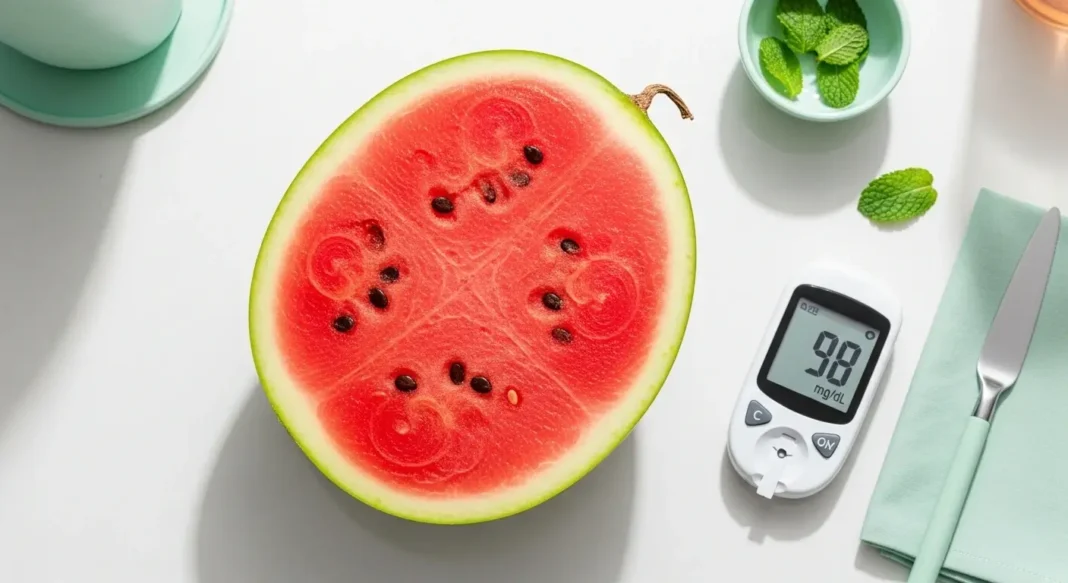


Let me tell you something that might surprise you: the conversation around watermelon and diabetes is far more nuanced than the simple yes-or-no answer most people are looking for. I’ve spent years working with diabetic patients and nutrition clients, and this question comes up almost every summer without fail.
Here’s the thing—watermelon has this reputation problem. It’s sweet, it’s delicious, and naturally, people with diabetes worry it’s off-limits. But the reality? It’s more complicated and, honestly, more interesting than you’d think.
🍉🔍 Want the TRUTH about watermelon & diabetes? CLICK to learn MORE!
Understanding the Watermelon-Diabetes Connection
Before we dive into whether watermelon deserves a spot in your diabetes meal plan, let’s get clear on what we’re actually dealing with here.
Watermelon is roughly 92% water (hence the name, right?). The remaining 8% contains natural sugars, vitamins, antioxidants, and a small amount of fiber. When someone with diabetes eats any carbohydrate-containing food, their body breaks it down into glucose, which enters the bloodstream. The question isn’t really “does watermelon contain sugar?”—because it obviously does—but rather “how does watermelon affect blood sugar levels compared to other foods?”
The Glycemic Index Factor
This is where things get interesting. Watermelon has a high glycemic index (GI) of around 72-80, which sounds alarming at first. The glycemic index measures how quickly a food raises blood sugar levels on a scale of 0-100. Generally, foods above 70 are considered high-GI.
But here’s what most articles won’t tell you: the glycemic index alone doesn’t tell the whole story. It’s measured using a fixed amount of carbohydrate (typically 50 grams), not a realistic serving size.
Glycemic Load: The More Important Number
Enter glycemic load (GL), which is arguably far more relevant for real-world eating. Glycemic load takes into account both the quality of the carbohydrate (GI) and the quantity you actually eat.
A typical serving of watermelon (about 120 grams or roughly 3/4 cup of diced fruit) contains only about 6-8 grams of carbohydrate. This gives watermelon a glycemic load of around 4-5, which is actually quite low. For context, anything under 10 is considered low GL.
So yes, watermelon can raise blood sugar quickly—but because you’re not eating massive amounts of carbs in a normal serving, the overall impact is relatively modest.
The Nutritional Profile: What’s Actually in Watermelon?
Let’s break down what you’re getting when you enjoy a serving of this summer fruit.
Per 100 grams of watermelon, you’ll find:
- Calories: 30
- Carbohydrates: 7.6 grams
- Sugars: 6.2 grams
- Fiber: 0.4 grams
- Protein: 0.6 grams
- Fat: 0.2 grams
Beyond the basic macros, watermelon offers some genuinely beneficial micronutrients:
Vitamin C: A powerful antioxidant that supports immune function and may help with wound healing—particularly important for people with diabetes who often experience slower healing.
Lycopene: This is where watermelon really shines. It contains more lycopene than raw tomatoes, believe it or not. Lycopene is associated with heart health, and since people with diabetes have an elevated risk of cardiovascular disease, this isn’t insignificant.
Vitamin A: Important for eye health, which matters because diabetic retinopathy is a real concern for many people managing this condition.
Potassium: Helps regulate blood pressure, and many diabetes medications can affect potassium levels.
Citrulline: This amino acid is converted to arginine in the body and may support blood vessel health and circulation.
The Benefits of Watermelon for People with Diabetes
I’m not going to sit here and tell you watermelon is a superfood that will cure diabetes—because it won’t. But when consumed mindfully, it does offer some legitimate benefits.
Hydration Powerhouse
Here’s something I’ve noticed working with clients during summer months: dehydration is sneakily common among people with diabetes, especially those with elevated blood sugars. High blood glucose causes increased urination, which leads to fluid loss.
Watermelon’s 92% water content makes it an incredibly hydrating food choice. One client of mine, a construction worker with type 2 diabetes, found that having watermelon as an afternoon snack during hot days helped him stay better hydrated than he’d been in years. His blood sugar management actually improved because he wasn’t constantly battling dehydration-related spikes.
Antioxidant Protection
The lycopene and vitamin C in watermelon aren’t just nice-to-haves. Oxidative stress plays a significant role in diabetes complications, and antioxidants help combat this damage at the cellular level.
Research has shown that lycopene may help reduce markers of inflammation and oxidative stress in people with diabetes. While eating watermelon alone won’t reverse complications, every bit of antioxidant support helps when you’re managing a chronic condition.
Low Calorie Satisfaction
One of the biggest challenges for people with type 2 diabetes is weight management. Watermelon provides a sweet, satisfying treat at only 30 calories per 100 grams. Compare that to a small cookie (often 50-100 calories with less nutritional value), and you can see why watermelon might be the smarter dessert choice.
I’ve had clients successfully replace their evening ice cream habit with frozen watermelon chunks, and they’ve been genuinely happy with the swap—not to mention their HbA1c levels improved.
Natural Energy Without the Crash
The natural sugars in watermelon can provide a quick energy boost, which can be beneficial before or after physical activity. Unlike processed sugary snacks, watermelon comes packaged with water and nutrients that help moderate its impact on blood sugar.
The Potential Concerns and How to Address Them
I’d be doing you a disservice if I didn’t talk about the legitimate concerns surrounding watermelon and diabetes.
Blood Sugar Spikes: The Reality
Yes, watermelon can cause blood sugar to rise—that’s simply what happens when you eat carbohydrates. The question is whether that rise is problematic.
For most people with well-controlled diabetes, a reasonable serving of watermelon causes a modest, manageable increase in blood sugar. However, if your diabetes is poorly controlled or you’re eating watermelon on an empty stomach in large quantities, you might experience more significant spikes.
I always tell people: test, don’t guess. Check your blood sugar before eating watermelon and then again 1-2 hours later. Everyone’s body responds differently, and your glucose meter will give you personalized data that’s far more valuable than generalized advice.
The Portion Size Problem
Here’s where most people get into trouble. A “serving” of watermelon in research literature is typically 120-150 grams (about 3/4 cup diced). But let’s be honest—when people cut into a watermelon, they’re often eating 2-3 cups or more in one sitting.
That’s when the low glycemic load becomes less impressive. If you triple your serving size, you’re tripling the carbohydrate content and the blood sugar impact.
Individual Variation
Some people with diabetes can eat moderate amounts of watermelon without any issues. Others find that even small portions cause noticeable blood sugar increases. Factors like your current glucose levels, medication regimen, stress levels, physical activity, and even the time of day can all influence how your body responds.
Smart Strategies for Including Watermelon in a Diabetes Meal Plan
If you want to enjoy watermelon while managing diabetes effectively, here are some practical, evidence-based strategies that actually work in real life.
Pair It with Protein or Healthy Fat
This is probably the single most important tip I can give you. Eating watermelon alone means you’re consuming pure carbohydrate with minimal fiber to slow digestion. The result? Faster blood sugar rise.
Instead, try these combinations:
- Watermelon with a handful of almonds or walnuts
- Watermelon cubes with small chunks of feta cheese (trust me, this Greek combination is delicious)
- Watermelon smoothie with Greek yogurt
- Watermelon salad with grilled chicken
The protein and fat slow down the absorption of sugar into your bloodstream, creating a more gradual, manageable blood glucose response.
Watch Your Portions
Use actual measuring cups, at least initially, to understand what a proper serving looks like. One cup of diced watermelon contains about 11-12 grams of carbohydrate. If you’re carb counting (and many people with diabetes are), this gives you a concrete number to work with.
A practical trick: pre-portion your watermelon into single-serving containers. This prevents the common scenario of sitting down with half a watermelon and a spoon, mindlessly eating until it’s gone.
Timing Matters
Your body’s insulin sensitivity varies throughout the day. Many people find they handle carbohydrates better earlier in the day when insulin sensitivity is typically higher.
Consider having watermelon:
- As part of breakfast or lunch rather than dinner
- As a post-workout snack when your muscles are primed to absorb glucose
- Not as the first thing you eat on an empty stomach
Avoid eating it late at night before bed, as nighttime blood sugar spikes can be particularly problematic and harder to manage.
Choose the Right Ripeness
Interestingly, the ripeness of watermelon may affect its impact on blood sugar. Very ripe watermelon may have a slightly higher sugar concentration, though the research on this is limited. If you’re particularly sensitive to blood sugar fluctuations, slightly less ripe watermelon might be the better choice.
Stay Hydrated Separately
Just because watermelon is hydrating doesn’t mean you should skip your regular water intake. Proper hydration supports better blood sugar control overall, so drink water throughout the day in addition to enjoying water-rich foods.
What the Research Actually Says
Let me walk you through some of the scientific evidence, because I think it’s important to base decisions on actual data rather than internet fearmongering.
A study examining the effects of watermelon consumption found that the fruit’s high water content and relatively low carbohydrate density per serving make it a reasonable option for people managing diabetes. The key, researchers emphasized, was portion control and including watermelon as part of a balanced diet rather than in isolation.
Research on lycopene—watermelon’s star antioxidant—has shown promising results for cardiovascular health. Since cardiovascular disease is the leading cause of death among people with diabetes, anything that supports heart health deserves attention. Some studies have found that regular lycopene consumption is associated with reduced markers of inflammation and improved lipid profiles.
There’s also interesting research on citrulline, the amino acid abundant in watermelon. Some studies suggest it may help improve insulin sensitivity and glucose metabolism, though more research is needed to confirm these effects in humans with diabetes.
However—and this is important—no reputable research suggests that watermelon should be avoided entirely by people with diabetes. The consensus is that it can be part of a healthy diet when consumed mindfully and in appropriate portions.
Real-World Experiences: What People Actually Report
Beyond the research papers, I’ve seen countless real-world examples of people with diabetes successfully including watermelon in their diets.
One client with type 2 diabetes told me she was terrified of watermelon for years because someone once told her it was “pure sugar.” When we finally tested her blood sugar response after eating one cup of watermelon with some cottage cheese, her glucose only increased by 25 mg/dL—completely manageable. She was thrilled to reclaim a favorite summer food she’d been unnecessarily avoiding.
Another person I worked with, however, found that watermelon caused more significant spikes for him personally, even in small amounts. He discovered through testing that his body simply handles some fruits better than others. That’s perfectly normal and exactly why personalized approaches matter.
The common thread? People who successfully include watermelon are those who test their individual response, pay attention to portions, and don’t eat it in isolation.
Comparing Watermelon to Other Fruits
To put things in perspective, let’s look at how watermelon stacks up against other common fruits for people with diabetes.
Watermelon actually has fewer carbohydrates per serving than many fruits people regularly eat without concern. For example:
- One medium banana: 27 grams of carbs
- One medium apple: 25 grams of carbs
- One cup of grapes: 27 grams of carbs
- One cup of watermelon: 11-12 grams of carbs
The high glycemic index of watermelon often gets more attention than these more carb-dense options simply because it’s been marketed as a “high GI food.” But in practice, the lower carb content means your total blood sugar impact may actually be less than other fruits you’re already eating.
Berries are often recommended as the “best” fruit for diabetes due to their high fiber and low sugar content. That’s valid, and berries are excellent choices. But that doesn’t mean watermelon is off-limits—it just means you need to be more mindful of portions compared to berries.
💡📉 Take CONTROL of your blood sugar — CLICK to see if watermelon is SAFE!
Special Considerations for Different Types of Diabetes
Type 1 Diabetes
If you have type 1 diabetes and take insulin, watermelon can definitely fit into your meal plan. You’ll want to accurately count the carbohydrates and dose your insulin accordingly. The rapid-acting nature of watermelon’s carbs means you might need to take your insulin slightly earlier than usual to match the blood sugar rise.
Some people with type 1 find that watermelon works well as a treatment for mild hypoglycemia because of its quick-acting sugars. Just be sure to follow up with more substantial food to prevent a rebound low.
Type 2 Diabetes
For type 2 diabetes, watermelon can be part of an overall healthy eating pattern that emphasizes whole foods, appropriate portions, and balanced meals. If you’re working on weight loss, watermelon’s low calorie density can be advantageous.
However, if you’re in the early stages of managing type 2 diabetes and your blood sugars are still quite elevated, you might want to be more conservative with fruit portions until your glucose levels are better controlled.
Prediabetes
If you have prediabetes, watermelon in moderation is perfectly fine. In fact, focusing on whole fruits like watermelon rather than processed sweets is part of the lifestyle changes that can help prevent progression to type 2 diabetes. Just maintain awareness of total carbohydrate intake across your day.
Creating Diabetes-Friendly Watermelon Recipes
Let me share some practical ways to enjoy watermelon that won’t send your blood sugar on a roller coaster.
Watermelon and Feta Salad: Cube watermelon, add crumbled feta cheese, fresh mint, a drizzle of olive oil, and a squeeze of lime. The fat from cheese and oil slows carb absorption, while the protein in feta adds staying power.
Frozen Watermelon Bites: Freeze watermelon cubes and eat them as a refreshing dessert. Frozen fruit takes longer to eat, which naturally helps with portion control.
Watermelon Smoothie: Blend watermelon with Greek yogurt, a handful of spinach, ice, and a tablespoon of chia seeds. This creates a balanced snack with protein, healthy fats, and fiber to moderate blood sugar impact.
Grilled Watermelon: Yes, really. Lightly grilling watermelon caramelizes its natural sugars and creates a sophisticated side dish. Serve it alongside grilled chicken or fish for a complete meal.
When to Exercise Caution
While watermelon can work for many people with diabetes, there are situations where you should be more careful or consult with your healthcare team.
Skip or significantly limit watermelon if:
- Your diabetes is currently poorly controlled with consistently high blood sugars
- You’re in the hospital or dealing with diabetic ketoacidosis
- Your healthcare provider has specifically recommended very low carbohydrate intake temporarily
- You personally have tested watermelon and found it causes problematic spikes for you
Also, be aware that watermelon juice or smoothies made primarily with watermelon are more problematic than eating the whole fruit. The processing breaks down what little fiber exists, and you can consume far more carbohydrate far more quickly in liquid form.
The Bottom Line: Is Watermelon Good for Diabetes?
After everything we’ve discussed, here’s my honest take: watermelon can absolutely be part of a healthy diet for people with diabetes—with some important caveats.
It’s not a miracle food, and it’s not forbidden fruit. It’s simply a nutritious, hydrating food that contains natural sugars and should be consumed mindfully, in appropriate portions, and ideally paired with protein or healthy fats.
The high glycemic index is less scary when you understand glycemic load. The sugar content is less concerning when you see it has fewer carbs per serving than most other fruits. The potential blood sugar impact is manageable when you use smart strategies like portion control and food pairing.
What matters most is your individual response. Test your blood sugar, pay attention to how your body reacts, and adjust accordingly. What works perfectly for one person with diabetes might not work as well for another—and that’s completely normal.
Don’t let fear or outdated information rob you of enjoying delicious, nutritious foods. Diabetes management is about finding balance, not about deprivation. Watermelon, enjoyed responsibly and mindfully, can definitely have a place in that balanced approach.
Your Next Steps
If you’ve been avoiding watermelon due to diabetes, consider giving it a fair trial. Start with a small portion (3/4 to 1 cup), pair it with some protein or healthy fat, and test your blood sugar response. Keep a food journal noting how you feel and what your glucose levels do.
Talk to your diabetes educator or dietitian about incorporating fruits you enjoy into your meal plan. They can help you understand your personal carbohydrate targets and how watermelon fits into your overall dietary pattern.
Remember, managing diabetes successfully isn’t about following rigid rules—it’s about understanding your body, making informed choices, and finding an eating pattern you can sustain for the long term. Watermelon might just be a small, refreshing part of that sustainable approach.
Stay curious, stay flexible, and most importantly, stay in conversation with your healthcare team about what works best for your unique situation. Here’s to enjoying summer’s sweetest fruit without the guilt or worry—just pure, mindful enjoyment.
🍉✔️ Make SMART food choices — CLICK to check how watermelon affects glucose!
The information provided on HealthyPa.com is for educational and informational purposes only and is not intended as medical advice. The content on this website, including articles, reviews, and product recommendations, should not be used as a substitute for professional medical advice, diagnosis, or treatment.
Always seek the advice of your physician or other qualified health provider with any questions you may have regarding a medical condition or before starting any new supplement, diet, or exercise program. Never disregard professional medical advice or delay in seeking it because of something you have read on this website.
The statements regarding dietary supplements have not been evaluated by the Food and Drug Administration (FDA). These products are not intended to diagnose, treat, cure, or prevent any disease.
Individual results may vary. The testimonials and experiences shared on this website are individual cases and do not guarantee that you will achieve the same results.
If you are pregnant, nursing, taking medication, or have a medical condition, consult your healthcare provider before using any products reviewed or recommended on this site.
HealthyPa.com and its authors, contributors, and affiliated parties assume no responsibility for any consequences relating directly or indirectly to any action or inaction you take based on the information found on this website.
By using this website, you acknowledge and agree to this disclaimer.
HealthyPa.com is reader-supported. When you buy through links on our site, we may earn an affiliate commission at no additional cost to you. This helps us keep our content free and continue providing valuable health information. We only recommend products we genuinely believe in. Learn more in our full Affiliate Disclosure Policy.
Hey, you used to write excellent, but the last few posts have been kinda boringK I miss your great writings. Past few posts are just a bit out of track! come on!