

If you’ve ever stood in the supplement aisle staring at bottles labeled “collagen” and “collagen peptides” wondering what the difference actually is, you’re not alone. I’ve been there too, squinting at labels, trying to decode which one would actually help my creaky knees and, let’s be honest, those fine lines that seem to appear overnight.
Here’s the thing: the collagen supplement industry is a bit of a confusing maze. You’ll see terms like “hydrolyzed collagen,” “collagen peptides,” “collagen hydrolysate,” and just plain “collagen” thrown around like they mean completely different things. Spoiler alert: most of them don’t.
In this guide, I’m breaking down everything you need to know about collagen vs collagen peptides—what they are, how they work, which one your body can actually use, and whether they’re worth the hype (and your hard-earned cash).
What Exactly Is Collagen?
Before we dive into the peptides debate, let’s talk about what collagen actually is.
Collagen is the most abundant protein in your body, making up roughly 30% of your total protein content. Think of it as the scaffolding that holds everything together—your skin, bones, tendons, ligaments, and even your blood vessels rely on collagen for structure and strength.
Your body naturally produces collagen by combining amino acids (the building blocks of proteins) from the foods you eat. The three main amino acids involved are glycine, proline, and hydroxyproline. When these come together in the right way, they form long, twisted chains that create the strong, rope-like fibers we call collagen.
There are actually 28 different types of collagen identified by scientists, but a few key ones dominate:
- Type I: Found in your skin, bones, tendons, and ligaments—this is the big one, making up about 90% of your body’s collagen
- Type II: Mostly found in cartilage, the cushiony tissue between your joints
- Type III: Present in your skin, muscles, and blood vessels

- Type IV: Found in the layers of your skin
- Type V: Located in hair and the surfaces of cells

The problem? As early as your mid-20s, your body starts producing less collagen each year. By the time you hit 40, you’re losing about 1% annually. By 80, you’ve got just a fraction of what you had in your youth. Factors like smoking, sun damage, stress, and poor sleep accelerate this decline even faster.
That’s where collagen supplements come in—but not all collagen is created equal.
Understanding Collagen Peptides (aka Hydrolyzed Collagen)
Here’s where things get interesting.
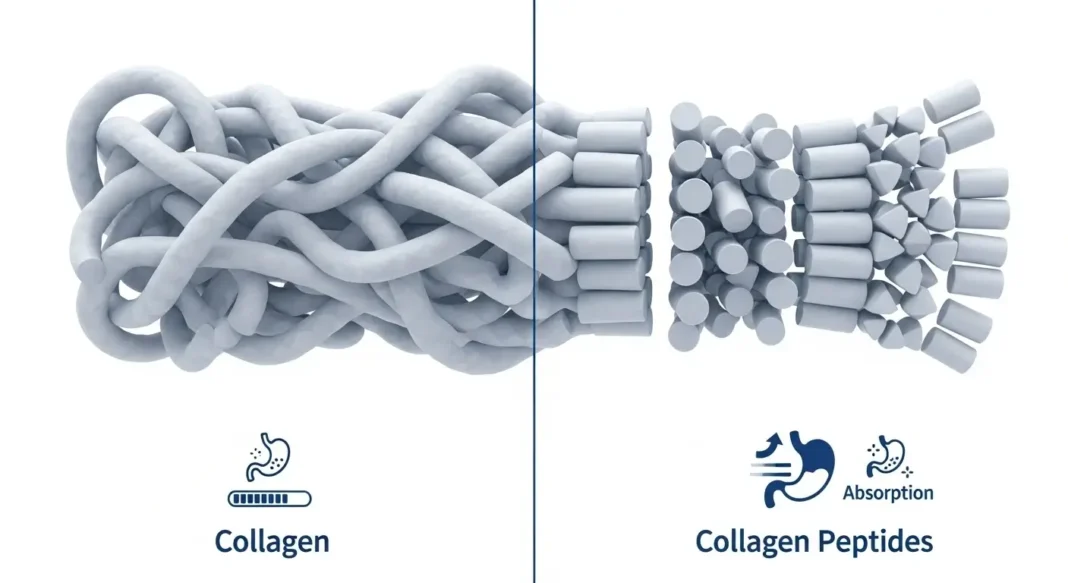
When people talk about “collagen peptides” or “hydrolyzed collagen,” they’re referring to collagen that’s been broken down into much smaller pieces through a process called hydrolysis. Think of it like taking a long piece of rope and cutting it into tiny, manageable threads.
Native collagen—the kind found naturally in animal tissues—has a molecular structure that’s enormous. We’re talking about three long chains of over 1,000 amino acids twisted together in a tight triple helix. This structure is what gives collagen its strength in your body, but it also makes it incredibly difficult to digest and absorb when you eat it.
During hydrolysis, manufacturers use enzymes, heat, or acids to break down these massive collagen molecules into much shorter chains called peptides. Collagen peptides are typically 50-100 times smaller than intact collagen molecules, with a much lower molecular weight—usually between 3-6 kDa (kilodaltons).
Why does size matter? Because these smaller peptides can actually pass through your intestinal wall and enter your bloodstream. From there, they travel to your skin, joints, bones, and other tissues where your body can use them.
Think of it this way: trying to absorb full-length collagen is like trying to squeeze a garden hose through a coffee filter. It’s just not happening. But collagen peptides? They slip right through.
The Real Difference: Collagen vs Collagen Peptides
Let’s cut through the confusion with some straight talk.
Size and Structure
Native Collagen: Long, intact protein chains with high molecular weight. About 300 nanometers long. Tough, fibrous, and insoluble in water.
Collagen Peptides: Short chains of amino acids with low molecular weight. 50-100 times smaller than native collagen. Dissolves easily in both hot and cold liquids.
How Your Body Absorbs Them
This is the crucial part that most people miss.
When you eat regular collagen (say, from a tough cut of meat or bone broth), your digestive system has to work hard to break it down. Your stomach acid and digestive enzymes eventually break these large proteins into amino acids, but it’s a slow, incomplete process. And here’s the kicker: much of that native collagen is simply too large to cross your intestinal barrier, meaning it just… passes through.
Collagen peptides, on the other hand, are pre-digested. They’re already in a form your body can use. Research shows that these peptides are rapidly absorbed in your small intestine and can reach peak blood concentration within just 1-2 hours after consumption.
Even better? Studies have tracked these peptides and found they actually accumulate in cartilage and skin tissue, where they can stimulate your body’s own collagen production.
Bioavailability: The Game Changer
Bioavailability is science-speak for “how much of this stuff can my body actually use?”
Native collagen has poor bioavailability. Your body struggles to break it down and can’t absorb much of it.
Collagen peptides have high bioavailability. They’re already broken down, so your body can absorb and use significantly more of what you consume.
This is why virtually all collagen supplements on the market today are actually collagen peptides. The terms “collagen peptides,” “hydrolyzed collagen,” and “collagen hydrolysate” all refer to the same thing—they’re just different ways of describing the end product.
Production Methods
Native collagen is produced naturally by your body’s fibroblast cells. When you eat collagen-rich foods like bone broth, your body extracts what it can during digestion.
Collagen peptides are manufactured through controlled enzymatic hydrolysis. Manufacturers take collagen from animal sources (typically cow hides, fish skin and scales, pork, or chicken cartilage) and use specific enzymes to break down the protein chains to a desired molecular weight.
What Does Science Say? The Research Behind Collagen Peptides
Alright, let’s talk evidence. Because claims are nice, but what does the actual research show?
Skin Health and Anti-Aging
This is where collagen peptides really shine. A comprehensive review that analyzed 26 randomized controlled trials involving 1,721 patients found that hydrolyzed collagen supplementation significantly improved both skin hydration and elasticity compared to placebo groups.
Another systematic review of 19 studies including over 1,000 participants (mostly women aged 20-70) found that taking hydrolyzed collagen improved skin moisture, elasticity, and reduced wrinkles compared to placebo treatments. Most studies used doses between 2.5-10 grams daily for periods ranging from 8-12 weeks.
The most impressive results came from collagen peptides enriched with specific bioactive peptides like prolyl-hydroxyproline (Pro-Hyp) and hydroxyprolyl-glycine (Hyp-Gly). These particular peptides seem to be more resistant to digestive enzymes and show up in higher concentrations in the bloodstream.
Joint Health and Pain Relief
If you’re an athlete or dealing with joint pain, the research here is particularly encouraging.
A 24-week study of 147 athletes found that those taking 10 grams of collagen hydrolysate daily experienced significant improvements in joint pain—whether at rest, walking, standing, carrying objects, or lifting. The effects were particularly pronounced in those with knee pain.
A meta-analysis of randomized placebo-controlled trials found that collagen supplementation effectively decreased pain scores and improved function in people with osteoarthritis. The Western Ontario and McMaster Universities Osteoarthritis Index (WOMAC) scores—a standard measure of arthritis symptoms—improved significantly in the collagen groups.
The mechanism? Researchers believe that collagen peptides accumulate in cartilage tissue and stimulate chondrocytes (cartilage cells) to produce more extracellular matrix molecules, potentially helping to maintain and repair cartilage structure.
Bone Density
This one’s particularly interesting for post-menopausal women. A study of 102 post-menopausal individuals with reduced bone mineral density (BMD) found that taking just 5 grams of collagen peptides daily for one year led to significant increases in BMD in both the spine and femur compared to placebo.
A follow-up study tracking 31 of these women for a total of 4 years showed progressive increases in bone density over time, suggesting long-term benefits from consistent supplementation.
Hair and Nails
The evidence here is thinner (no pun intended), but what exists is promising. A small 2017 study found that taking 2.5 grams of collagen daily for 24 weeks improved nail brittleness and growth. However, this study didn’t have a control group, so take it with a grain of salt.
For hair growth and thickness, human studies are still lacking. Most of the marketing claims in this area aren’t backed by solid research yet.
Sources Matter: Where Does Your Collagen Come From?
Not all collagen peptides are created equal. The source matters—both for effectiveness and for dietary considerations.
Marine Collagen
Extracted from fish skin, scales, and bones. Primarily Type I collagen. Often considered to have the smallest peptide size and best absorption. This is the go-to for people focused on skin health. It’s also the only option for pescatarians.
The downside? It can be pricier, and if you have a fish allergy, it’s a no-go.
Bovine Collagen (from Cows)
Derived from cow hides and bones. Contains both Type I and Type III collagen. This is typically the most affordable option and is excellent for skin, hair, nails, and bone health.
One consideration: some research has raised questions about bovine collagen’s environmental impact, particularly when sourced from tropical regions.
Porcine Collagen (from Pigs)
Extracted from pig skin and bones. Similar to bovine collagen in composition. Not suitable for those who avoid pork for religious or dietary reasons.
Chicken Collagen
Usually sourced from chicken cartilage and breastbone. Rich in Type II collagen, making it particularly useful for joint health and cartilage support. This is often sold as “undenatured Type II collagen” or UC-II, which works through a different mechanism—oral tolerance—rather than direct absorption.
How to Actually Use Collagen Peptides
You’ve decided to give collagen peptides a try. Great! Here’s what you need to know.
Dosage
Most research uses doses between 2.5-15 grams per day. Here’s a rough guide based on your goals:
- Skin health: 2.5-10 grams daily
- Joint support: 5-10 grams daily
- Bone health: 5 grams daily
More isn’t always better. Studies haven’t shown significant additional benefits from mega-doses, so stick within these ranges unless directed otherwise by a healthcare provider.
When to Take It
The good news? Timing doesn’t seem to matter much. Your body will absorb and use collagen peptides whether you take them in the morning with coffee, post-workout, or before bed.
That said, some people prefer taking collagen with vitamin C, which is essential for collagen synthesis in your body. Having your collagen with a vitamin C-rich food or supplement might maximize benefits.
Forms Available
Powder: The most popular and cost-effective option. Unflavored powders dissolve easily in coffee, smoothies, or even water. Flavored versions work well in water or shakes.
Capsules/Tablets: Convenient but typically contain less collagen per serving. You’d need to take several pills to get the same dose as a scoop of powder.
Liquid: Pre-mixed drinks with collagen. Most convenient but often the most expensive option per gram of collagen.
Gummies: Tasty but usually contain the least amount of actual collagen, plus added sugar. Fun but not the most effective choice.
Pro Tips for Maximum Results
- Be consistent: Collagen isn’t a one-and-done supplement. Benefits typically become noticeable after 8-12 weeks of daily use.
- Don’t skip protein: Your body still needs adequate protein from your diet to make collagen. Collagen peptides are a boost, not a replacement for good nutrition.
- Combine with vitamin C: Foods rich in vitamin C (citrus fruits, bell peppers, strawberries) support your body’s natural collagen production.
- Stay hydrated: Skin hydration works hand-in-hand with collagen for that plump, healthy appearance.
- Protect what you have: No amount of supplementation will help if you’re constantly damaging your existing collagen. Wear sunscreen, don’t smoke, limit alcohol, and manage stress.
Who Should Avoid Collagen Supplements?
While collagen peptides are generally considered safe, they’re not for everyone.
People with allergies: If you’re allergic to the source animal (fish, beef, pork, chicken), avoid collagen derived from that source. Allergic reactions can include hives, digestive upset, or more severe responses.
Those with certain medical conditions: People with kidney problems should talk to their doctor first, as collagen supplements increase protein intake. Those prone to gout should also check with a healthcare provider.
Pregnant or breastfeeding: There isn’t enough research on collagen supplementation during pregnancy or breastfeeding. Most experts recommend playing it safe and avoiding supplementation during this time, or at least consulting with your doctor first.
On certain medications: While interactions are rare, if you’re taking medications for heart conditions, diabetes, or have had organ transplants, check with your healthcare provider.
The Vegan Dilemma: What About Plant-Based Collagen?
Here’s the truth: there’s no such thing as true vegan collagen from plants. Collagen is a protein found only in animals.
However, there are “vegan collagen” supplements on the market. These typically contain amino acids and other nutrients that support your body’s own collagen production—things like vitamin C, proline, glycine, and sometimes engineered peptides produced by genetically modified yeast and bacteria.
Do they work? The jury’s still out. There haven’t been enough studies comparing these plant-based alternatives to animal-derived collagen peptides.
For vegans and vegetarians, a better strategy might be focusing on collagen-boosting foods: plenty of vitamin C-rich fruits and vegetables, protein from beans and legumes, nuts, seeds, and foods high in amino acids like proline and glycine.
What About Collagen Creams and Topical Products?
Quick sidebar: should you be slathering collagen on your skin instead of swallowing it?
The short answer: topical collagen is nice, but it’s not doing what you think it’s doing.
Collagen molecules—even hydrolyzed ones—are generally too large to penetrate deep into your skin. Most collagen creams work as moisturizers on the surface but can’t deliver collagen into the dermis where it’s needed.
That said, creams containing peptides (smaller fragments that can penetrate) or ingredients that stimulate collagen production (like retinoids and vitamin C) can be effective. Just don’t expect topical collagen to replace oral supplementation for meaningful results.
The Bottom Line: Collagen vs Collagen Peptides
So, after all this, what’s the verdict?
Here’s the straight truth: when people compare “collagen vs collagen peptides,” they’re usually comparing apples to oranges. The collagen supplements you see on shelves are almost always collagen peptides—because that’s the only form your body can effectively absorb and use.
The terms “collagen peptides,” “hydrolyzed collagen,” and “collagen hydrolysate” are interchangeable. They all refer to collagen that’s been broken down through hydrolysis into smaller, bioavailable peptides.
Native collagen—the kind found naturally in foods—has its place in a healthy diet, but it can’t compete with the absorption and effectiveness of collagen peptides when it comes to supplementation.
What the research shows:
- Collagen peptides significantly improve skin hydration, elasticity, and reduce wrinkles with consistent use (8-12 weeks)
- Joint pain and stiffness improve with daily supplementation, particularly in active individuals and those with osteoarthritis
- Bone density can increase with long-term use, especially in post-menopausal women
- Doses between 2.5-10 grams daily appear safe and effective for most people
- The best results come from consistent, daily use—not sporadic supplementation
My take: If you’re going to invest in collagen supplements, go with hydrolyzed collagen peptides from a reputable source. Look for products that are third-party tested, specify their peptide molecular weight, and clearly list their source (marine, bovine, etc.).
But remember—supplements are exactly that: supplemental. They work best when combined with a protein-rich diet, adequate vitamin C intake, good sleep, stress management, sun protection, and all the other boring-but-true healthy lifestyle habits.
Collagen peptides aren’t magic. They won’t erase 20 years of sun damage or turn back time. But the science suggests they can genuinely support your skin, joints, and bones in meaningful ways—especially as you age and your natural collagen production declines.
Is it worth trying? If you’re dealing with joint discomfort, noticing changes in your skin, or just want to be proactive about aging, the research is encouraging enough to give it a shot. Just manage your expectations, be consistent, and give it at least 12 weeks before deciding if it’s working for you.
Your body has been making collagen your entire life. Sometimes, it just needs a little help keeping up.
Disclaimer: This article is for informational purposes only and not intended as medical advice. Always consult with a healthcare provider before starting any new supplement, especially if you have existing health conditions, are pregnant or breastfeeding, or are taking medications.
The information provided on HealthyPa.com is for educational and informational purposes only and is not intended as medical advice. The content on this website, including articles, reviews, and product recommendations, should not be used as a substitute for professional medical advice, diagnosis, or treatment.
Always seek the advice of your physician or other qualified health provider with any questions you may have regarding a medical condition or before starting any new supplement, diet, or exercise program. Never disregard professional medical advice or delay in seeking it because of something you have read on this website.
The statements regarding dietary supplements have not been evaluated by the Food and Drug Administration (FDA). These products are not intended to diagnose, treat, cure, or prevent any disease.
Individual results may vary. The testimonials and experiences shared on this website are individual cases and do not guarantee that you will achieve the same results.
If you are pregnant, nursing, taking medication, or have a medical condition, consult your healthcare provider before using any products reviewed or recommended on this site.
HealthyPa.com and its authors, contributors, and affiliated parties assume no responsibility for any consequences relating directly or indirectly to any action or inaction you take based on the information found on this website.
By using this website, you acknowledge and agree to this disclaimer.
HealthyPa.com is reader-supported. When you buy through links on our site, we may earn an affiliate commission at no additional cost to you. This helps us keep our content free and continue providing valuable health information. We only recommend products we genuinely believe in. Learn more in our full Affiliate Disclosure Policy.