


Your gut is more than just the engine that processes your breakfast burrito. It’s basically a second brain, a mood regulator, and your body’s immune system headquarters all rolled into one. If you’ve been feeling sluggish, bloated, or just…off, your gut might be trying to tell you something.
The good news? You don’t need expensive supplements or trendy cleanses to transform your digestive health. The path to a thriving gut microbiome is paved with simple, natural strategies that actually work—and I’m about to show you exactly how.
Understanding Your Gut Microbiome: The Trillions Working for You
Let me paint you a picture: right now, trillions of microorganisms are having a party in your intestines. These tiny residents—collectively known as your gut microbiome—include bacteria, fungi, viruses, and other microscopic life forms that outnumber your human cells.
But here’s the thing: not all gut bacteria are created equal. You’ve got the good guys (beneficial bacteria) and the troublemakers (pathogenic bacteria). When these two teams are balanced, your body functions like a well-oiled machine. When they’re not? That’s when problems start.
Research from institutions like Harvard has shown that gut health influences everything from your ability to fight off infections to your mental wellbeing. It’s connected to obesity, diabetes, heart disease, and even conditions like Alzheimer’s. The connection runs deep because your gut produces neurotransmitters, regulates inflammation, and literally talks to your brain through what scientists call the gut-brain axis.
Think about it: have you ever felt butterflies before a big presentation? That’s your gut responding to stress. Or maybe you’ve experienced “hangry” moments when your blood sugar drops? Your gut bacteria actually influence those feelings too.
✨ Ready to Transform Your Gut? Start with ONE Change TODAY! 💪
The Fermented Foods Revolution: Your Probiotic Powerhouses
If there’s one game-changer for gut health, it’s fermented foods. These aren’t your grandmother’s pickles (well, actually, they might be—traditional fermentation is making a serious comeback).
Fermented foods are like sending reinforcements to help your good bacteria thrive. When foods undergo natural fermentation, beneficial microorganisms multiply, creating live cultures that can colonize your digestive tract.
A groundbreaking Stanford study published in 2021 found something remarkable: participants who ate fermented foods for just 10 weeks showed increased microbiome diversity and decreased inflammatory markers. That’s not just impressive—it’s transformational.
The Fermented Foods Hall of Fame
Yogurt and Kefir: These dairy superstars contain live active cultures. Kefir, in particular, is like yogurt’s more powerful cousin, with multiple strains of beneficial bacteria and yeasts. Just make sure you’re choosing versions without added sugars, which can feed the bad bacteria you’re trying to eliminate.
Kimchi: This spicy Korean staple is loaded with Lactobacillus bacteria, the same beneficial strains found in many probiotic supplements. Plus, it’s made from cabbage and other vegetables, giving you a fiber boost at the same time.
Sauerkraut: Raw, unpasteurized sauerkraut (you’ll find it in the refrigerated section, not on regular shelves) contains billions of probiotics per serving. The key word here is “raw”—heat treatment kills those beneficial microbes.
Kombucha: This fizzy fermented tea has become wildly popular, and for good reason. It contains both probiotics and organic acids that support digestion.
Miso and Tempeh: These fermented soy products aren’t just for vegans. They’re packed with probiotics and make excellent additions to soups, stir-fries, and bowls.
Here’s a pro tip from someone who’s been there: start small. Your gut needs time to adjust to new bacterial strains. Begin with a tablespoon or two of sauerkraut or a few ounces of kefir, then gradually increase your intake over several weeks.
Feed Your Gut Garden: The Prebiotic Connection
Probiotics get all the glory, but prebiotics are the unsung heroes of gut health. Think of prebiotics as fertilizer for your gut garden—they’re the fiber-rich foods that feed your beneficial bacteria.
Your body can’t digest these special plant fibers, so they travel through your digestive system intact until they reach your colon, where your gut bacteria feast on them. When bacteria metabolize prebiotics, they produce short-chain fatty acids, which reduce inflammation and support your intestinal barrier.
Research has identified the top prebiotic champions: dandelion greens, Jerusalem artichokes, garlic, leeks, and onions lead the pack. But you’ll also find prebiotics in:
- Asparagus: Roast it with olive oil for a delicious side dish
- Bananas: Especially when they’re slightly green
- Oats: Your morning oatmeal is doing more than you think
- Apples: The fiber in apple skin is particularly beneficial
- Chicory root: Often found in prebiotic supplements
- Legumes: Beans, lentils, and chickpeas are prebiotic powerhouses
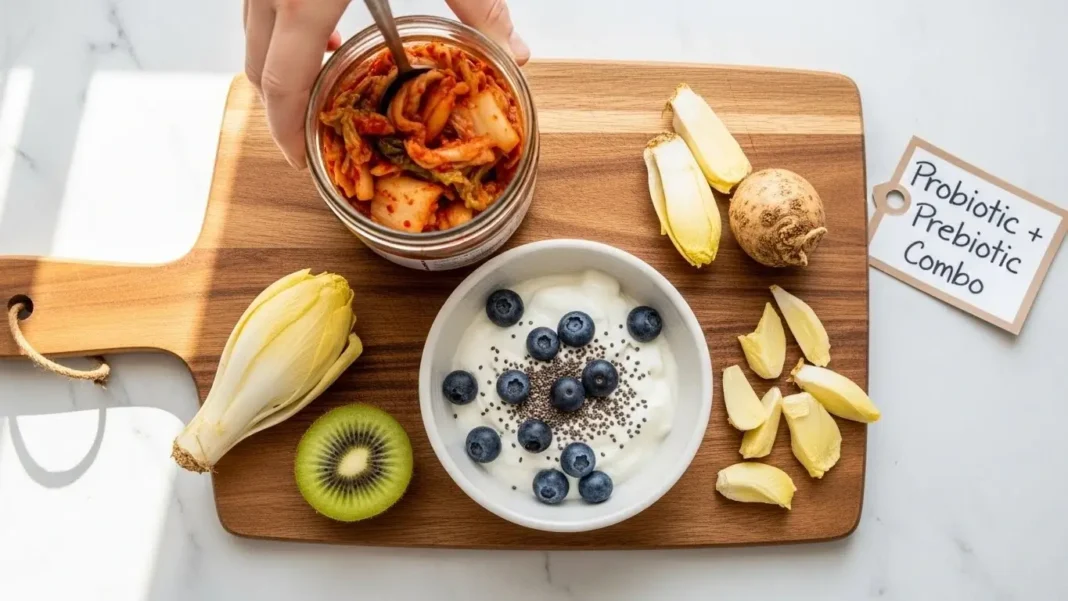
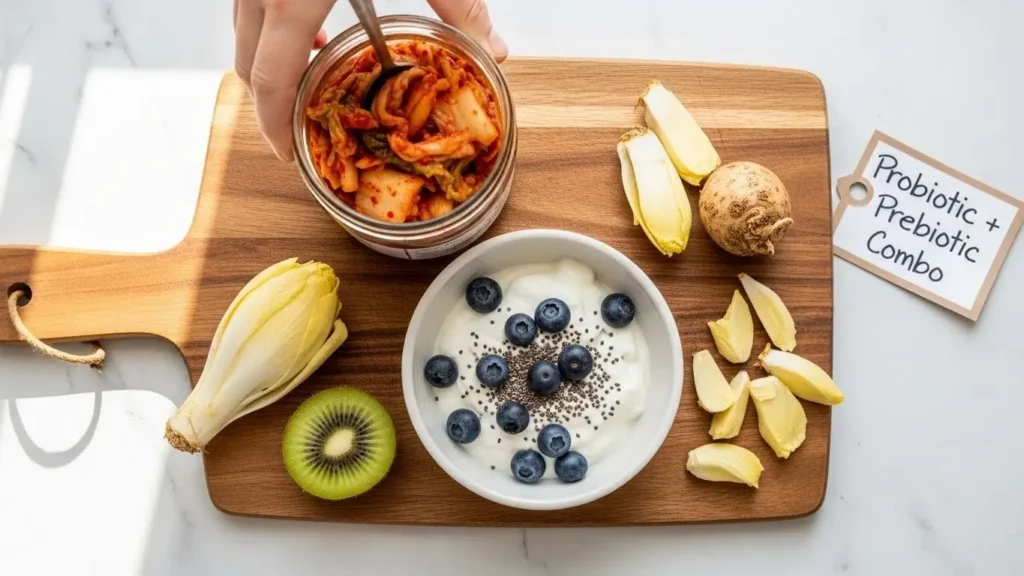
One of my favorite strategies is combining prebiotics and probiotics in the same meal—scientists call this synbiotic eating. Picture this: Greek yogurt topped with sliced banana and a sprinkle of oats. Or kimchi paired with roasted asparagus over quinoa. You’re essentially creating the perfect environment for your gut bacteria to flourish.
A 2024 study from the American Society for Nutrition found that garlic and onions contain multiple forms of prebiotics, making them particularly valuable. The best part? They’re flavor enhancers, so you’re probably already using them in your cooking.
🔥 Your Gut Will THANK You—Fuel It Right EVERY Day! 🌱
The Fiber Factor: Why 30 Grams Changes Everything
Let’s talk about something most Americans are seriously lacking: dietary fiber. Only about 5% of us get the recommended 30-40 grams per day, and that’s a problem because fiber is essentially gut bacteria food.
But not all fiber works the same way. Soluble fiber dissolves in water, forming a gel-like substance that slows digestion and feeds beneficial bacteria. Insoluble fiber adds bulk to stool and keeps things moving through your digestive tract.
The real magic happens when you eat a variety of fiber sources. Different types of fiber feed different bacterial strains, and diversity is the name of the gut health game. A 2021 study published in the journal Cell found that dietary diversity directly correlates with microbiome diversity—and a diverse microbiome is associated with better overall health.
Fiber-Rich Champions
Whole Grains: Oats, quinoa, brown rice, and whole wheat provide both types of fiber. That morning bowl of oatmeal? It’s supporting your gut in multiple ways.
Legumes: Beans and lentils are fiber superstars. A single cup of black beans delivers 15 grams of fiber—that’s half your daily goal.
Vegetables: Broccoli, Brussels sprouts, carrots, and leafy greens should be your go-to choices. Aim for variety in color—each pigment represents different beneficial compounds.
Fruits: Berries, pears, apples (with skin), and avocados pack serious fiber. Raspberries are particularly impressive with 8 grams per cup.
Nuts and Seeds: Almonds, chia seeds, and flaxseeds contribute both fiber and healthy fats. Chia seeds can absorb 10-12 times their weight in water, helping with hydration and gut motility.
One important note: if you’re currently eating a low-fiber diet, increase your intake gradually. Jumping from 10 grams to 40 grams overnight will leave you bloated and uncomfortable. Add 5 grams per week and drink plenty of water to help fiber do its job effectively.
The Stress-Gut Connection: Why Your Emotions Live in Your Intestines
Here’s something that might surprise you: your gut and brain are in constant communication. Scientists call this the gut-brain axis, and it’s one of the most fascinating areas of modern research.
When you’re stressed, your body releases cortisol and adrenaline—hormones that were designed to help you escape from predators but now activate when you’re stuck in traffic or facing a work deadline. These hormones directly affect your digestive system, slowing down digestion, altering gut motility, and changing the composition of your microbiome.
Studies have shown that chronic stress can reduce beneficial bacteria like Lactobacillus and Bifidobacterium while promoting the growth of potentially harmful species. It also increases intestinal permeability (sometimes called “leaky gut”), which allows toxins and bacteria to escape into your bloodstream, triggering inflammation.
But here’s the flip side: an unhealthy gut can make you more susceptible to stress and anxiety. Your gut produces about 90% of your body’s serotonin—the neurotransmitter that regulates mood, sleep, and anxiety. When your microbiome is out of balance, serotonin production can be affected, potentially contributing to depression and anxiety disorders.
The statistics are sobering: nearly 40% of people with digestive issues report that stress worsens their symptoms. Conditions like irritable bowel syndrome (IBS) are strongly linked to psychological stress.
Stress Management Strategies for Gut Health
Mindful Eating: Put your phone away during meals. Chew thoroughly—aim for 20-30 chews per bite. Eating in a relaxed state activates your parasympathetic nervous system (rest and digest mode), optimizing digestion.
Deep Breathing: Before meals, take five deep breaths. Breathe in through your nose for four counts, hold for four, exhale for six. This simple practice signals your body to shift into digestion mode.
Regular Exercise: Physical activity reduces stress hormones and has been shown to increase beneficial gut bacteria diversity. Even 30 minutes of moderate exercise like brisk walking makes a difference.
Meditation and Yoga: These practices lower cortisol levels and reduce inflammation. Studies show that people who meditate regularly have more diverse microbiomes.
Social Connection: Spending quality time with loved ones reduces stress and supports overall health, including gut function.
The connection between stress and gut health is bidirectional—improving one helps the other. When you support your gut health through diet and lifestyle, you’re simultaneously supporting your mental health.
Sleep: The Unsung Hero of Gut Health
If you’re skimping on sleep, you’re sabotaging your gut health. Recent research has revealed a profound connection between sleep and the microbiome—they influence each other in a continuous feedback loop.
Studies show that people with diverse gut microbiomes tend to sleep better, with improved sleep efficiency and fewer nighttime awakenings. Specific bacterial strains, like Lachnospiraceae and Faecalibacterium, have been linked to longer, more restorative sleep.
Conversely, sleep deprivation disrupts your microbiome. Just one night of poor sleep can alter the ratio of Firmicutes to Bacteroidetes—two major bacterial phyla—potentially affecting metabolism, inflammation, and immune function.
The mechanism works through multiple pathways. Your gut bacteria follow circadian rhythms, with different species becoming active at different times of day. When you stay up late or have irregular sleep schedules, you disrupt these rhythms, leading to dysbiosis. Additionally, certain gut bacteria produce sleep-regulating neurotransmitters like serotonin and GABA.
Sleep Optimization for Better Gut Health
Consistent Schedule: Go to bed and wake up at the same time every day, even on weekends. Your gut bacteria thrive on routine.
7-9 Hours: This is the sweet spot for most adults. Less than seven hours consistently is associated with reduced microbiome diversity.
Dark, Cool Room: Temperature and light exposure affect both sleep quality and circadian rhythms, which influence your microbiome.
Early Dinner: Try to finish eating at least 3 hours before bedtime. Late-night eating disrupts your gut bacteria’s circadian patterns.
Limit Alcohol: While it might help you fall asleep initially, alcohol disrupts gut bacteria and reduces sleep quality.
Screen Curfew: Blue light from devices suppresses melatonin production. Power down electronics at least an hour before bed.
The relationship between sleep and gut health is so strong that some researchers are exploring probiotics specifically designed to improve sleep quality. While this field is still emerging, the evidence suggests that prioritizing sleep is one of the most powerful (and free) interventions for gut health.
Stay Hydrated: The Simple Strategy Everyone Overlooks
Water is so basic that we often forget how crucial it is for digestive health. Your intestines need adequate hydration to break down food, absorb nutrients, and keep things moving smoothly through your system.
Hydration supports the mucosal lining of your intestines, which acts as a barrier between your gut bacteria and your bloodstream. When you’re dehydrated, this lining can become compromised, potentially leading to increased intestinal permeability.
Water also helps fiber do its job. Remember that fiber we talked about earlier? Without sufficient water, it can’t form the gel-like substance that feeds beneficial bacteria and promotes regular bowel movements. In fact, increasing fiber without increasing water can actually worsen constipation.
Hydration Guidelines
Daily Goal: Aim for at least 8 glasses (64 ounces) of water daily, but individual needs vary based on activity level, climate, and body size.
Morning Ritual: Start your day with a glass of water. Your body is naturally dehydrated after sleeping, and morning hydration jumpstarts digestion.
With Meals: Drinking water with meals aids digestion, contrary to outdated advice suggesting otherwise. Just don’t chug enormous amounts that could dilute digestive enzymes.
Herbal Teas: Chamomile, ginger, and peppermint teas count toward your hydration goals while providing additional digestive benefits.
Limit Dehydrating Beverages: Coffee and alcohol have diuretic effects. For every caffeinated or alcoholic drink, add an extra glass of water.
Water-Rich Foods: Cucumbers, watermelon, oranges, and lettuce contribute to your hydration while providing nutrients and fiber.
One simple test: check your urine color. Pale yellow indicates good hydration; dark yellow or amber suggests you need more water.
🌊 Hydrate, Nourish, THRIVE—Your Gut Deserves the Best! 🎯
Exercise: Moving Your Body to Move Your Gut
Physical activity isn’t just good for your heart and muscles—it’s transformational for your gut microbiome. Research consistently shows that people who exercise regularly have greater microbial diversity than sedentary individuals.
A 2019 systematic review found that 150-270 minutes of moderate to high-intensity exercise per week for at least six weeks positively affects gut microbiota composition. The benefits are even stronger when you combine aerobic exercise with resistance training.
Exercise influences gut health through multiple mechanisms. Physical activity increases gut motility, reducing the time food spends in your digestive tract and lowering the risk of constipation. It also promotes the growth of beneficial bacteria that produce butyrate, a short-chain fatty acid with powerful anti-inflammatory effects.
Interestingly, elite athletes have been found to have more diverse microbiomes than non-athletes, with higher levels of bacteria associated with lean body mass and metabolic health. But you don’t need to run marathons to see benefits—moderate exercise is enough.
Exercise Recommendations for Gut Health
Aerobic Activity: Brisk walking, jogging, cycling, or swimming for 30-60 minutes, most days of the week. This increases circulation to the digestive organs and promotes beneficial bacterial growth.
Resistance Training: Weightlifting or bodyweight exercises 2-3 times per week. Building muscle mass improves metabolic health, which supports a healthy microbiome.
Yoga: Specific poses like twists and forward folds can massage the digestive organs and promote gut motility while reducing stress.
Consistency Over Intensity: Regular moderate exercise beats occasional intense workouts. Your gut bacteria respond best to consistent physical activity patterns.
Post-Meal Walks: A 10-15 minute walk after meals aids digestion and helps regulate blood sugar, which influences gut bacteria composition.
Avoid Overtraining: Excessive exercise without adequate recovery can increase intestinal permeability and inflammation. More isn’t always better.
The gut-exercise connection works both ways. Emerging research suggests that a healthy microbiome might actually improve exercise performance and recovery. Some bacteria produce metabolites that reduce exercise-induced inflammation and support muscle function.
What to Limit: The Gut Health Saboteurs
While adding beneficial foods is crucial, knowing what to limit is equally important. Certain dietary choices can wreak havoc on your gut microbiome, promoting the growth of harmful bacteria while starving beneficial species.
Sugar: The Microbiome Wrecker
Added sugars feed pathogenic bacteria and yeasts while providing no benefit to your healthy gut flora. High sugar consumption has been linked to decreased microbial diversity and increased intestinal inflammation.
The American Heart Association recommends limiting added sugars to 25 grams (6 teaspoons) daily for women and 36 grams (9 teaspoons) for men. Most Americans consume 77 grams or more—that’s nearly 20 teaspoons.
Read labels carefully. Sugar hides under dozens of names: high fructose corn syrup, agave nectar, cane juice, dextrose, maltose, and many others. Even “healthy” products like yogurt, granola, and salad dressings often contain shocking amounts of added sugar.
Artificial Sweeteners: Not the Solution
Research suggests that artificial sweeteners like aspartame, saccharin, and sucralose can alter gut bacteria composition in ways that may promote glucose intolerance and metabolic problems. While the evidence is still emerging, it appears they’re not the free pass we once thought.
Processed Foods: Empty Calories, Damaged Gut
Ultra-processed foods—those packaged items with ingredient lists longer than this sentence—are typically loaded with additives, preservatives, unhealthy fats, and refined carbohydrates while being stripped of fiber and nutrients.
These foods promote the growth of inflammatory bacteria while starving beneficial species. They’re also designed to be hyper-palatable, making them easy to overconsume.
Excessive Alcohol: Disrupting the Balance
While moderate red wine consumption has been touted for health benefits, alcohol generally disrupts gut microbiome balance. It can increase intestinal permeability, promote harmful bacterial overgrowth, and reduce beneficial species.
If you drink, do so in moderation: up to one drink daily for women, two for men. But honestly, from a gut health perspective, less is better.
Unnecessary Antibiotics: Nuke the Gut to Save the Host?
Antibiotics save lives, no question. But they’re also gut microbiome weapons of mass destruction, killing beneficial bacteria along with harmful ones. While sometimes necessary, antibiotics should be used judiciously.
If you must take antibiotics, consider these strategies:
- Take a high-quality probiotic during and after treatment (separated from antibiotic doses by a few hours)
- Increase fermented food consumption after completing your course
- Focus on prebiotic-rich foods to help beneficial bacteria repopulate
- Give your gut several weeks to months to recover
The Diversity Principle: Eat 30+ Plant Foods Weekly
One of the most important discoveries in gut health research is this: dietary diversity directly translates to microbial diversity. And microbial diversity is strongly associated with better health outcomes across the board.
The American Gut Project, one of the largest microbiome studies ever conducted, found that people who ate more than 30 different plant foods per week had significantly more diverse gut microbiomes than those eating 10 or fewer plant varieties.
This might sound daunting, but it’s more achievable than you think. We’re not talking about 30 different meals—just 30 different plant-based ingredients across all your meals and snacks.
How to Hit 30+ Plants Weekly
Think Variety, Not Volume: A mixed green salad might contain 5-7 different plants (lettuce, spinach, tomatoes, cucumbers, carrots, bell peppers, onions). A trail mix could add another 5 (almonds, cashews, raisins, dried cranberries, pumpkin seeds).
Spices and Herbs Count: That pinch of oregano, dash of cinnamon, or sprinkle of turmeric adds to your tally while providing additional health benefits.
Legumes Are Your Friends: Beans, lentils, peas, and peanuts each count separately. Adding different legumes throughout the week quickly boosts your numbers.
Whole Grains Diversity: Oats for breakfast, quinoa for lunch, brown rice for dinner—three plants right there.
Frozen and Canned Work: Don’t feel pressured to buy only fresh produce. Frozen vegetables often retain more nutrients than “fresh” ones that sat in transit for days. Canned beans are convenient and nutritious.
Weekly Tracking: Keep a simple list on your phone or fridge. You might be surprised how quickly you rack up diverse plants without trying too hard.
This approach ensures you’re feeding different bacterial species with their preferred foods, promoting a balanced and resilient microbiome ecosystem.
Practical Implementation: Your 4-Week Gut Health Plan
Theory is great, but let’s get practical. Here’s a realistic plan to improve your gut health naturally without overwhelming yourself:
Week 1: Foundation Building
- Add one serving of fermented food daily (start with yogurt or kefir if you’re new)
- Increase water intake to 8 glasses daily
- Include one prebiotic-rich food with each meal
- Take a 15-minute walk after dinner
Week 2: Fiber Focus
- Gradually increase fiber by 5 grams daily
- Try one new whole grain (quinoa, farro, bulgur)
- Add legumes to at least 3 meals this week
- Begin tracking your plant diversity count
Week 3: Lifestyle Integration
- Establish a consistent sleep schedule (same bedtime, 7-8 hours)
- Practice 5 minutes of deep breathing before meals
- Try a second type of fermented food (maybe kimchi or sauerkraut)
- Reduce added sugar intake by half
Week 4: Optimization
- Aim for 30 different plant foods
- Add a stress-reduction practice (meditation, yoga, journaling)
- Evaluate alcohol and processed food consumption
- Create sustainable meal patterns you can maintain long-term
Remember: sustainable change happens gradually. Don’t try to overhaul everything overnight. Choose one or two strategies that resonate most with you and build from there.
Signs Your Gut Health is Improving
How will you know if these changes are working? Watch for these positive indicators:
Digestive Improvements: More regular bowel movements, less bloating and gas, reduced constipation or diarrhea
Energy Boost: Better energy levels throughout the day without mid-afternoon crashes
Mood Enhancement: Improved mood, reduced anxiety, better stress tolerance
Better Sleep: Falling asleep easier, sleeping more soundly, waking refreshed
Clearer Skin: Reduced acne, eczema, or other skin conditions often improve with gut health
Stronger Immunity: Fewer colds and infections, faster recovery when you do get sick
Stable Weight: Easier weight management without extreme dieting
Reduced Inflammation: Less joint pain, fewer headaches, reduced body aches
These changes typically don’t happen overnight. Give your gut microbiome at least 2-4 weeks to respond to dietary changes, though some people notice improvements within days. Remember, you’re changing an entire ecosystem—patience is key.
When to Seek Professional Help
While natural strategies work for many people, certain situations warrant professional medical attention:
- Persistent digestive symptoms lasting more than a few weeks
- Unexplained weight loss or gain
- Blood in stool
- Severe abdominal pain
- Chronic diarrhea or constipation that doesn’t improve with dietary changes
- Symptoms interfering with daily life
A gastroenterologist can run tests to rule out conditions like inflammatory bowel disease, celiac disease, or other digestive disorders that require medical treatment. Sometimes, working with a registered dietitian who specializes in gut health can provide personalized guidance.
The Long Game: Making Gut Health a Lifestyle
Improving gut health naturally isn’t a 30-day challenge or a quick fix—it’s a lifestyle shift. But here’s the beautiful part: once you experience the benefits of a healthy gut, maintaining these habits becomes easier because you feel the difference.
Your gut microbiome is remarkably resilient and responsive. It can bounce back from years of poor dietary choices, though it takes consistent effort. Every meal is an opportunity to nourish your microbiome or to harm it—the choice is yours.
Think of your gut bacteria as pets you’re caring for. You wouldn’t feed your dog candy for every meal or skip walks for months. Your microbiome deserves similar consistent care and attention.
Start where you are. Use what you have. Do what you can. Your gut—and your entire body—will thank you for it.
💫 Transform Your Health From the INSIDE Out—Start Now! 🚀
Remember: This article provides educational information about natural approaches to gut health. It’s not intended to replace professional medical advice, diagnosis, or treatment. Always consult with a qualified healthcare provider before making significant changes to your diet or lifestyle, especially if you have existing health conditions or take medications.
The information provided on HealthyPa.com is for educational and informational purposes only and is not intended as medical advice. The content on this website, including articles, reviews, and product recommendations, should not be used as a substitute for professional medical advice, diagnosis, or treatment.
Always seek the advice of your physician or other qualified health provider with any questions you may have regarding a medical condition or before starting any new supplement, diet, or exercise program. Never disregard professional medical advice or delay in seeking it because of something you have read on this website.
The statements regarding dietary supplements have not been evaluated by the Food and Drug Administration (FDA). These products are not intended to diagnose, treat, cure, or prevent any disease.
Individual results may vary. The testimonials and experiences shared on this website are individual cases and do not guarantee that you will achieve the same results.
If you are pregnant, nursing, taking medication, or have a medical condition, consult your healthcare provider before using any products reviewed or recommended on this site.
HealthyPa.com and its authors, contributors, and affiliated parties assume no responsibility for any consequences relating directly or indirectly to any action or inaction you take based on the information found on this website.
By using this website, you acknowledge and agree to this disclaimer.
HealthyPa.com is reader-supported. When you buy through links on our site, we may earn an affiliate commission at no additional cost to you. This helps us keep our content free and continue providing valuable health information. We only recommend products we genuinely believe in. Learn more in our full Affiliate Disclosure Policy.
Really interesting how your energy levels increase when your gut is improving.
I reckon something really special in this site.